

The Street is the Clinic: Homelessness and Radical Care in Venice
Street medicine brings essential health care directly to people experiencing homelessness. Through the work of Dr. Coley King and St. Joseph Center’s outreach teams in Venice, this story explores the importance of compassionate, consistent care that meets people where they are.
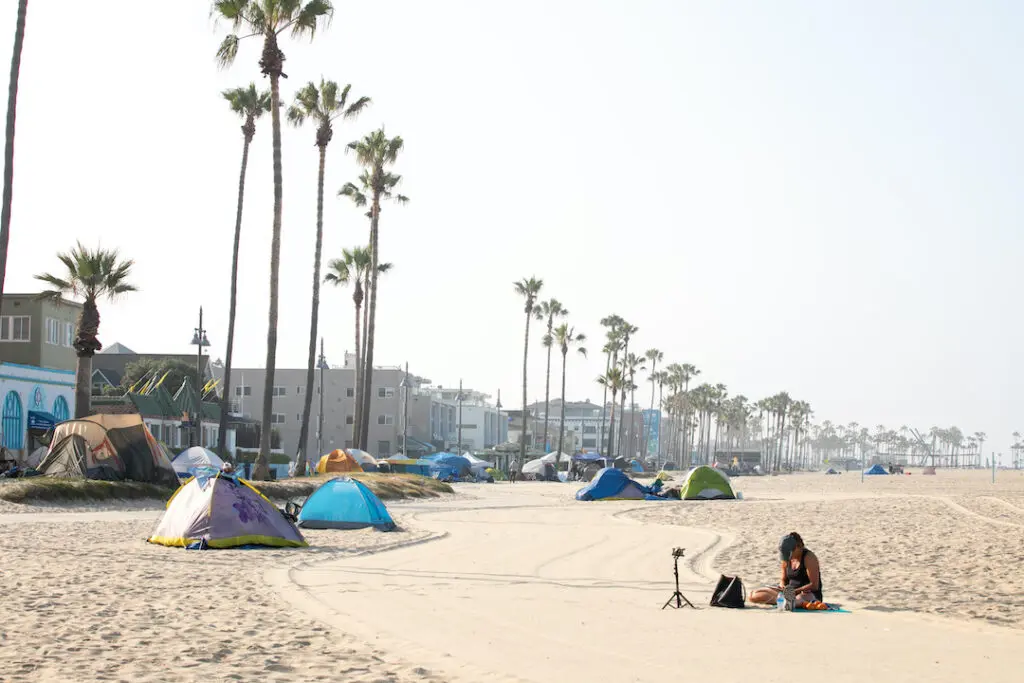
A few blocks up from the beach, the streets look a lot different than they used to. Before the Venice Ocean Front Walk project got started during the height of the pandemic, I remember biking down the boardwalk and being completely shocked by the number of tents lined along the path. There were so many that I recorded a video and sent it to a friend to help me process what I was seeing. It took incredible resilience from Angelenos, service providers, and neighbors to push through that crisis together. While hundreds of people were brought inside, walking through the neighborhood now reminds me of a basic truth: moving off the street doesn’t magically fix a person’s health or undo years of trying to survive on an obstructed path. In fact, trauma runs so deep that St. Joseph Center outreach workers have even reported newly housed clients pitching tents inside their new apartments just to feel safe enough to sleep.
Real care for those experiencing homelessness takes time. It requires showing up consistently with dignity, stability-focused support, and healing-centered services.
Beyond the Numbers
That progress shows up in the numbers, too. As St. Joseph Center celebrates 50 years of service this year, the focus remains grounded in measurable impact. According to data from the 2026 LAHSA Point in Time Count, St. Joseph Center helped reduce homelessness by 10% in Service Planning Area 5 (SPA 5), contributing to a 33% overall decrease over the past three years.
That ongoing effort is also how I met Vince. About a year after the Venice Ocean Front Walk project wrapped up, our paths started crossing near the neighborhood spot where he parks his van. As Head of Communications for St. Joseph Center, I spend a lot of time behind a screen, but getting out on the ground keeps me connected to why this work matters.
The other day, Vince was hanging out in the heat near Starbucks with a cup of black coffee steaming from his cup.
“How’s the coffee today?” I asked.
“Great,” he said, smiling. “I get one a day.”
Over time, we have built a real rapport. Vince is a senior who was once a sales expert and was facing health challenges. He didn’t ask for money or a handout. Instead, he remembered what I had been going through and asked how I was recovering from my recent surgery. When he shared that he had been facing even more health complications after having a similar procedure himself, I mentioned that I heard that Dr. Coley King was great to see if he was getting proper medical care.
Vince’s face lit up. “I see him all the time,” Vince said. “I love Dr. King. I need to make an appointment.”
I wished him a good day, walked away, and stood waiting at the crosswalk light. The signal was taking which seemed like forever. Getting hot and impatient, I turned back, ready to take a different route. As I looked towards Starbucks, I caught Vince staring in my direction before he quickly looked away. It was a silent, honest moment that stayed with me. It reminded me that beyond the struggles and statistics we grapple with in this homelessness crisis, simply being seen and remembered by another person carries its own weight. I am still rooting for Vince to get his housing situation fully sorted out, but in the meantime, knowing he is safe in his van and healthy is a priority.
“Real care for those experiencing homelessness takes time.”
Care That Meets People Where They Are
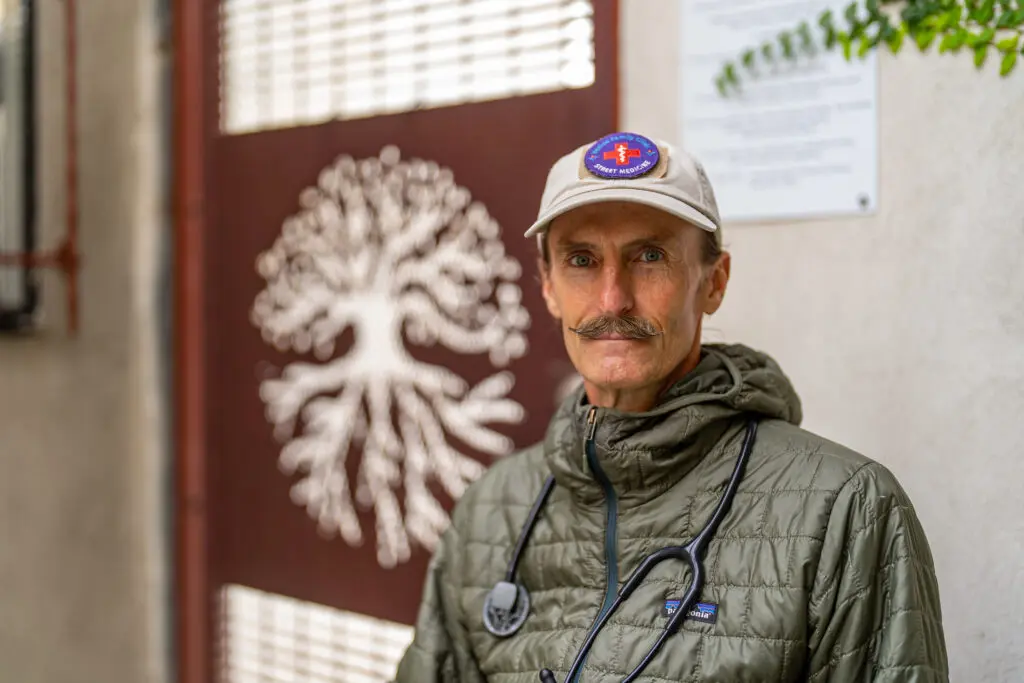
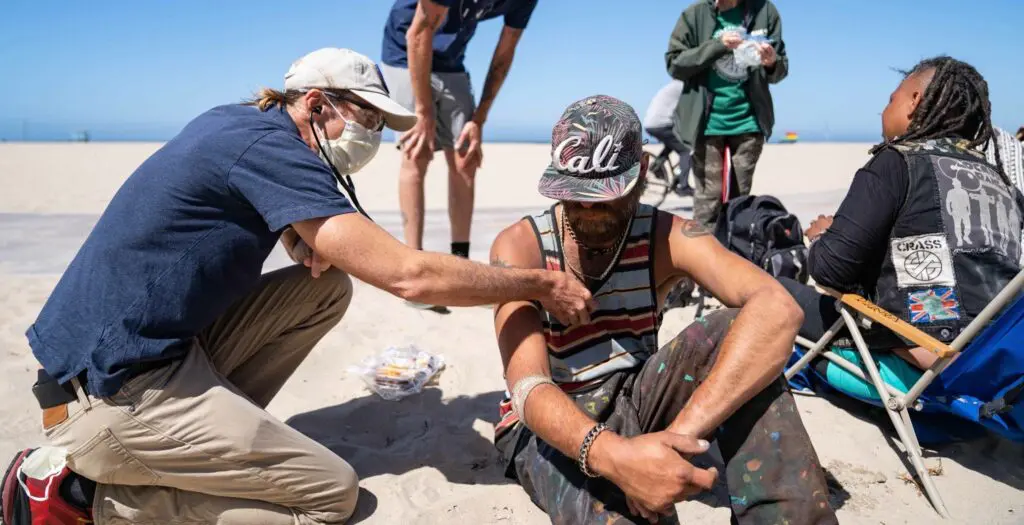
If you spend any time in Venice, you know Dr. King. As Director of Homeless Health Care at Venice Family Clinic, he is a true expert in street medicine and a respected powerhouse frontline worker in the community. With his cowboy swag, wide-brimmed hat, everyday clothing, and stethoscope slung over his shoulder, he meets people right where they are.
St. Joseph Center was an early pioneer in street medicine. Having interviewed Dr. King and photographed his work on the ground, I have seen his vital presence in the community firsthand. During the height of the pandemic, Dr. King provided health checkups at Bread & Roses Café and worked alongside St. Joseph Center’s Access Center, where intake services and hot showers are offered. While he is no longer stationed at the Access Center, ensuring people receive immediate medical attention alongside our intake services and hot showers remains a core priority. We are deeply grateful for doctors like him who meet people where they are with compassion.
The Realities of Survival
Living in a van or on the street breaks a person’s body down fast.
What people on the outside often call “refusing help” or label as poor choices almost always boils down to pure survival. Here are a few instances that verify the need for radical care when it comes to helping those who are unhoused:
- Substance Use and Safety (Myth vs. Reality): Substance use is often viewed as a moral failure, but on the street, it is frequently a tool for self-preservation. When the prospect of withdrawal sets in, desperation takes over. Many folks use stimulants like crystal meth to stay awake through the night to avoid being robbed, assaulted, or raped. Treating substance use and addiction is non-negotiable to save lives. It also requires nonjudgmental care to understand the survival behind it.
- Exhaustion and Day Sleeping: Staying awake all night for safety creates severe sleep deprivation. When you see someone sleeping outside or in a vehicle during the day, they are not lazy. They are utterly exhausted from the constant struggle throughout the night, using daylight as their only window of safety.
- Foot Struggles: Walking miles in ill-fitting shoes can lead to foot ulcers and severe infections. Without basic care, like nourishing food and medication, simple blisters can turn into life-threatening medical emergencies.
- ID Issues: Without a physical ID, picking up standard prescriptions or enrolling in healthcare programs is almost impossible.
- Belongings: Going to an emergency room means leaving your van or personal belongings unattended for hours. Most people come back to find their stuff stolen, towed, or thrown away.
In the Doctor’s Words
“Our patients have a hard time reaching traditional clinic sites. There are lots of barriers, fear of being judged, trauma, or just not having a way to get there. If we don’t go to them, they simply go without care.” — Dr. Coley King, Venice Family Clinic (Source: Venice Family Clinic Street Medicine Features)
“If we don’t go to them, they simply go without care.”
Street medicine works because it starts with respect. Frontline workers like Dr. Coley King, along with St. Joseph Center and our partner organizations across Los Angeles, ensure people like Vince are seen, cared for, and kept safe. If we fully show up on the sidewalks instead of the sidelines, we can bring everyone home.
Related Posts
Venice Boardwalk to Justice Leader: Derrick Rutledge Builds a New Life
After experiencing homelessness on the Venice Boardwalk, Derrick Rutledge found housing and support through St. Joseph Center. Today, he draws on his experiences to help people navigating the justice system, bringing compassion and a commitment to opportunity to his work with Los Angeles County.

Once a dancer in some of the 1990s’ most iconic music videos, Shuren Joice later found herself living in her car after losing her longtime home. She shares how St. Joseph Center and its partners helped her find permanent housing, regain stability, and continue her journey toward healing and peace.
SJC Youth Malik to Become First Resident of New Youth Housing in Santa Monica
Malik reflects on how St. Joseph Center’s Youth Resource Team helped him build trust, find community, graduate high school, and create a more stable future for himself and his daughter.