

From the Spotlight to a Home of Her Own
Once a dancer in some of the 1990s’ most iconic music videos, Shuren Joice later found herself living in her car after losing her longtime home. She shares how St. Joseph Center and its partners helped her find permanent housing, regain stability, and continue her journey toward healing and peace.
“I’m a little star,” Shuren Joice said, laughing.
She has the résumé to prove it. During the 1990s, Shuren appeared in music videos alongside some of the era’s biggest performers, including MC Hammer and Luther Vandross. Most notably, she was one of the original dancers featured in Sir Mix-a-Lot’s iconic “Baby Got Back” video.
“I was a ’90s video vixen,” she said. “I did a lot of videos. I did radio commercials. I did a lot.”

Years after being part of that defining moment in popular culture, Shuren found herself navigating a very different reality.
Losing the Only Home She Knew
In 2023, a sudden housing crisis left Shuren without a home as Hurricane Hilary approached.
The loss was about more than an apartment. Shuren had lived in the same townhouse for 33 years. Counting the years she spent there as a teenager, the property had been part of her life for nearly four decades.
“That was my only spot,” she said.
Shuren and residents from the other units went to City Hall for help. A liaison gave them a list of shelters and service organizations, but each place Shuren called said it was full or had no available resources.
St. Joseph Center was the exception.
“St. Joseph Center was the only place that answered and had the resources to help me,” she said.
Sleeping With One Eye Open
Without a safe place to stay, Shuren began living in her car and sometimes slept in a tent. Even when there was no immediate danger, she never felt able to let her guard down.
“You don’t sleep well because you always have one eye open,” she said. “You just have to stay mindful and keep watchful.”
Experiences during that period intensified the trauma Shuren already carried. She had survived severe abuse as a child and now found herself constantly assessing whether the people around her posed a threat. She remained friendly but kept her distance.
“I would say hello and goodbye because I’m always pleasant, but I didn’t let anybody get too close,” she said.
Shuren said the experience contributed to PTSD and affected how she interacted with others, particularly men. Even today, she is cautious around people she does not know or who have not been introduced by someone she trusts.
Still, she refused to allow fear or instability to take away the optimism that had carried her through other painful chapters.
“Life has thrown me a lot of bad stuff,” she said. “I refuse to let it win.”
“I refuse to let it win.”
A Door to Support
Shuren’s first connection with St. Joseph Center came through the Access Center, where she could receive essential services and begin navigating the available resources.
Her path eventually connected her with a network of programs providing meals, health care, case management, and housing assistance. She received meals through Bread & Roses Café, case management and medical support through UniHealth, and care through St. Joseph Center’s partnership with Venice Family Clinic.
One of the health care providers Shuren met was Venice Family Clinic physician and street medicine expert Dr. Coley King.
For someone living with PTSD, the way care was delivered mattered as much as the treatment itself. Shuren appreciated that Dr. King understood and respected her physical boundaries.
“He respects your space,” she said. “Because of my experiences with men, it mattered that he didn’t get in my space.”
Although Shuren chose to remain with the doctor who has treated her since she was 19 and already holds her extensive medical records, her encounters with Dr. King left a lasting impression.
“Everybody loves Dr. King,” she said.

The Call That Changed Everything
The process of finding housing was not immediate. Shuren initially spent approximately nine months waiting for her case to move forward. Then she received a call from St. Joseph Center case manager Tanisha.
Within about a week, Shuren entered temporary housing. She first stayed at a hotel and later moved into interim housing at The Manor while continuing to work toward a permanent home.
“Once I spoke with Tanisha, it happened immediately,” Shuren said.
Through continued housing navigation and support, Shuren was referred to St. Joseph Center partner OPCC Westhaven DMH. The connection ultimately led to an apartment of her own in Los Angeles.
Shuren said receiving the news that she would be housed was the turning point in her journey.
“I didn’t think I would be housed so quickly,” she said. “I thought it was going to be another few years that I was going to be on the street.”
The support did not end when Shuren received her keys. She continued receiving calls from staff members checking on her well-being and asking whether she needed food, a blanket, or other essentials. She also received weekly grocery gift cards as she adjusted to life in housing.
“You don’t just house a person, and then they don’t hear anything else from you,” she said. “I was checked up on. I was called. I was asked if I was okay. I was asked if I needed a blanket or anything else.”
For Shuren, those calls demonstrated the importance of wrap-around support. Housing created a foundation, while consistent care helped her begin rebuilding her life.
“St. Joseph Center really did do its thing,” she said.
“You don’t just house a person, and then they don’t hear anything else from you.”
Still Moving Forward
Permanent housing has given Shuren stability, but she is honest that receiving an apartment did not erase every challenge. Noise and disruptions in her current building make it difficult for her to feel completely at peace, and she hopes she may eventually be able to move somewhere quieter.
Her journey toward healing also continues. Shuren manages chronic pain and arthritis affecting her hands, knees, shoulders, back, and hips. She cares for her mental health by walking, reading, and consciously returning to the optimism that has sustained her throughout her life.
“I take a walk. I can read a book a day,” she said. “I’ve always been a positive person. I don’t let things beat me.”
Shuren can now imagine a future beyond daily survival. Over the next five years, she hopes to feel “elevated” and continue moving toward greater comfort, healing, and peace.
She also remains eager to support the organization that answered when she needed help.
“If you ever need a success story, call me,” she said. “I could be 90 years old. That’s how grateful I am.”
For anyone currently sleeping in a car, living outside, or wondering whether life can change, Shuren offered the same message that has carried her forward.
“Don’t let life beat you down,” she said. “Life is meant to be lived. If you feel yourself getting down, take a break and say, ‘Hey, I’m still here. I’m here for a reason.’”

Related Posts
Venice Boardwalk to Justice Leader: Derrick Rutledge Builds a New Life
After experiencing homelessness on the Venice Boardwalk, Derrick Rutledge found housing and support through St. Joseph Center. Today, he draws on his experiences to help people navigating the justice system, bringing compassion and a commitment to opportunity to his work with Los Angeles County.
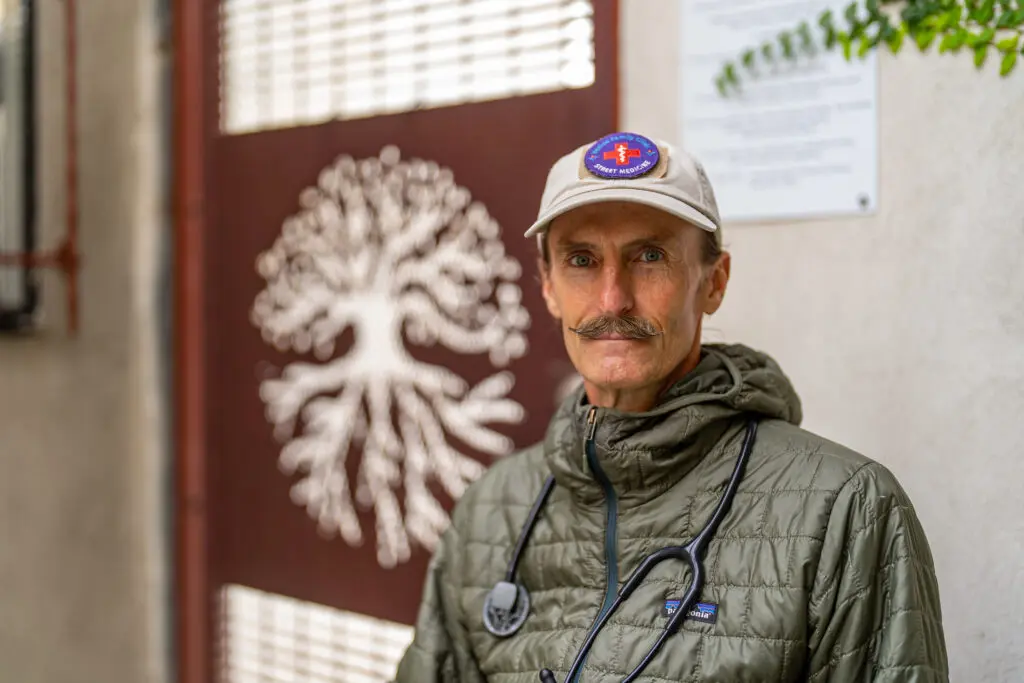
The Street is the Clinic: Homelessness and Radical Care in Venice
Street medicine brings essential health care directly to people experiencing homelessness. Through the work of Dr. Coley King and St. Joseph Center’s outreach teams in Venice, this story explores the importance of compassionate, consistent care that meets people where they are.

SJC Youth Malik to Become First Resident of New Youth Housing in Santa Monica
Malik reflects on how St. Joseph Center’s Youth Resource Team helped him build trust, find community, graduate high school, and create a more stable future for himself and his daughter.